Three Phase CIP System Plant About
|
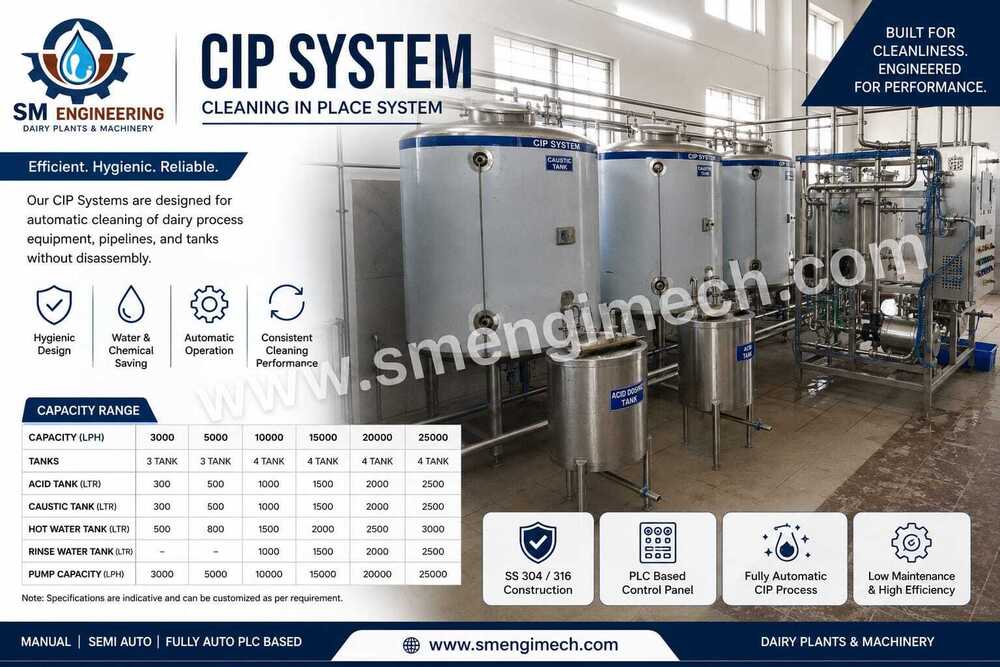
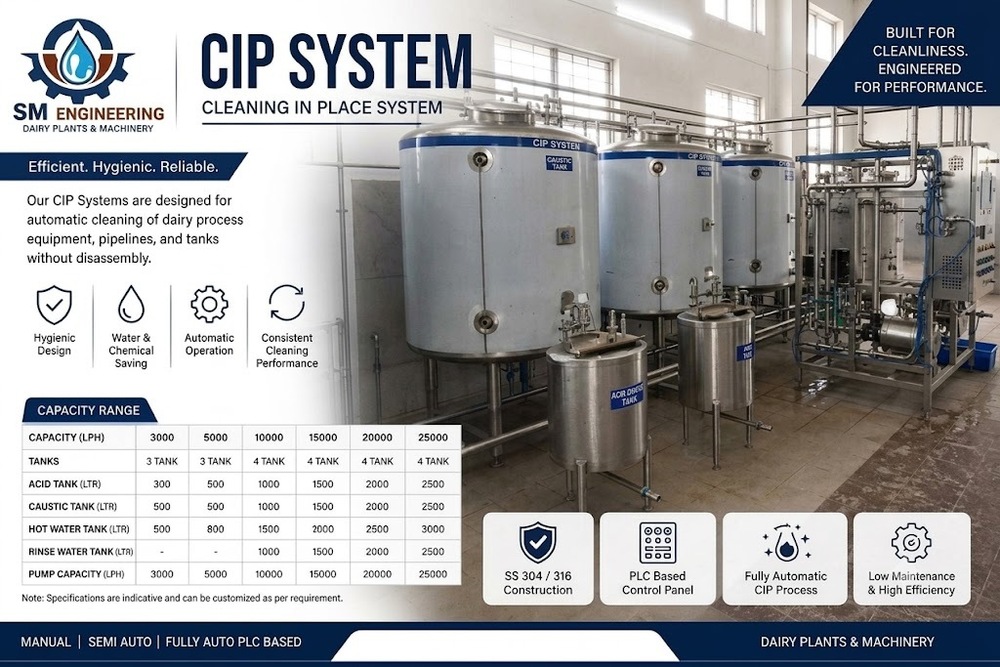
CAPACITY RANGE
|
3000
|
5000
|
10000
|
15000
|
20000
|
25000
|
|
CAPACITY (LPH)
|
3000
|
5000
|
10000
|
15000
|
20000
|
25000
|
|
TANKS
|
3 TANK
|
3 TANK
|
4 TANK
|
4 TANK
|
4 TANK
|
4 TANK
|
|
ACID TANK (LTR)
|
300
|
500
|
1000
|
1500
|
2000
|
2500
|
|
CAUSTIC TANK (LTR)
|
300
|
500
|
1000
|
1500
|
2000
|
2500
|
|
HOT WATER TANK (LTR)
|
500
|
800
|
1500
|
2000
|
2500
|
3000
|
|
RINSE WATER TANK (LTR)
|
-
|
-
|
1000
|
1500
|
2000
|
2500
|
|
PUMP CAPACITY (LPH)
|
3000
|
5000
|
10000
|
15000
|
20000
|
25000
|
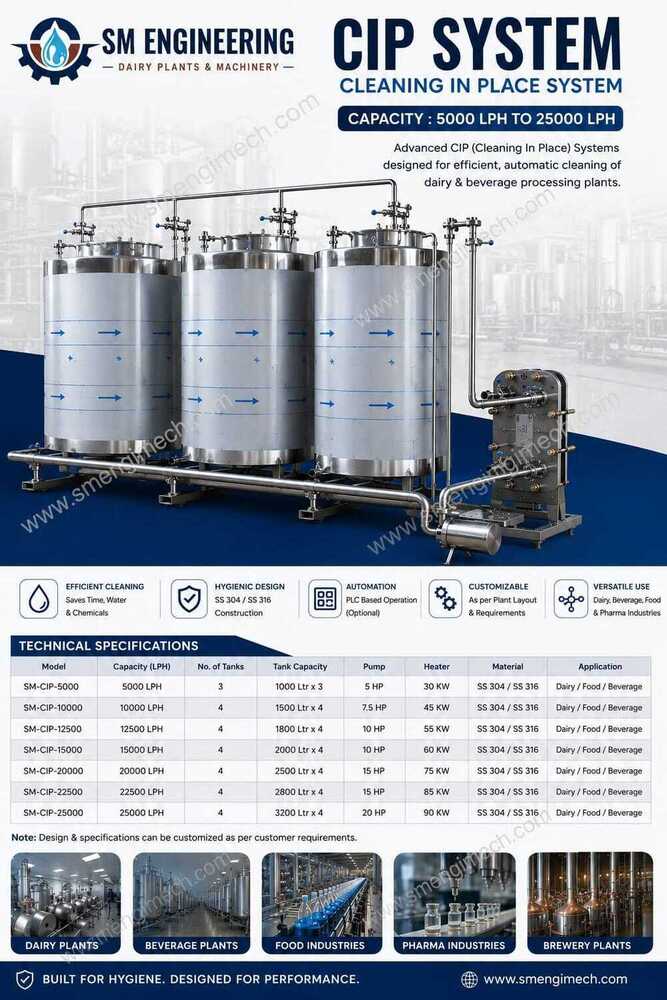
Customized, Compliant Sanitation SolutionsDesigned for industrial use, this Three Phase CIP System Plant caters to diverse cleaning requirements, offering configurations with one or multiple tanks, and the choice between centrifugal or positive displacement pumps. Built with SS 304 or SS 316, these systems feature internal mirror or matte finish and external matte finish, ensuring hygienic standards. The modular design and flexible automation levels make it ideal for a wide range of applications and regulatory demands.
User-Friendly Automation and Recipe ManagementWith PLC-based or semi-automatic control systems, including options for SCADA connectivity, users benefit from user-friendly interfaces and recipe management features. Cleaning parameters are easily programmable, enabling efficient operation, reduced manual intervention, and quick changeover for different cleaning cycles and process equipment.
Energy Efficient and Time Saving CleaningComplete CIP cycles can be achieved in as little as 15 minutes, with a maximum cycle time of 90 minutes. The system is engineered for high cleaning effectiveness, saving energy, water, and manpower. Various heating methods, such as electric, steam, and hot water, and strong insulation provide operational efficiency for all production environments.
FAQ's of Three Phase CIP System Plant:
Q: How does the Three Phase CIP System Plant enhance cleaning effectiveness in industrial processes?
A: The system uses high-flow centrifugal or positive displacement pumps, programmable cleaning cycles, and spray cleaning (no brushes) to ensure thorough removal of biological and chemical residues. The customizable design and programmable recipe management further optimize cleaning for each specific process or equipment.
Q: What industries can use this CIP System and for which applications is it best suited?
A: This system is widely used in dairy, beverage, food processing, pharmaceutical, brewery, and cosmetic industries, primarily for cleaning tanks, pipelines, reactors, and vessels. Its robust, compliant design suits any application requiring stringent sanitation and cGMP or FDA standards.
Q: When should a CIP cycle be performed using this plant?
A: CIP cycles are recommended between production batches, during product changeovers, after process shutdowns, or according to the plant's sanitation schedule. Cleaning frequency can be programmed based on contamination risk and regulatory requirements.
Q: Where is the Three Phase CIP System installed and can it be moved if necessary?
A: The system is available as a modular skid, which can be installed stationarily or designed for mobility (movable skids) to suit various plant layouts. Installation is typically indoors within a production or utility area, ensuring access to utilities like water, steam, and electricity.
Q: What is the step-by-step process for operating the CIP system?
A: The process involves selecting a cleaning recipe, starting the cycle via the PLC or panel, circulating cleaning solutions through process pipelines or tanks, rinsing, and completing the cycle automatically or semi-automatically. Sensors monitor flow and temperature, and the system can be integrated with SCADA for operation and monitoring.
Q: How is this CIP System plant beneficial in terms of time and resource optimization?
A: Automated cycles save significant time and reduce manual labor. The system ensures uniform, validated cleaning with minimal water, detergent, and energy use, improving resource efficiency, reducing production downtime, and minimizing the risk of contamination.
Q: What customizable features are available with this CIP Plant, and how do they cater to specific requirements?
A: Users can specify tank size (300L-5000L+), number of tanks, insulation, pump type, finish, heating method, control level, and accessory configuration. This adaptability guarantees that the system suits both small and large-scale operations while meeting particular cleaning, space, and compliance needs.

 Send Inquiry



 Send Inquiry

